What Can We Learn Today About the Romans
Every empire falls. There'southward no way to stop it. The only we affair can control is how it happens—whether it'll be a quiet, dignified passing of a torch or the flaming destruction of a nation torn down past barbarians.
Encounter ALSO: 10 Truly Icky Facts Well-nigh Ancient Roman Life
That's more than or less what happened to Rome, and the backwash was pure chaos. The fall of their empire sent the European world spiraling into a night age that took centuries to escape.
If we take them time to learn from their history, we'll see some eerie parallels with our own. And if history really does repeat itself, we'll become a pretty good idea of what's to come next.
10 Oversea Slave Laborers Won't Make Your Goods Forever
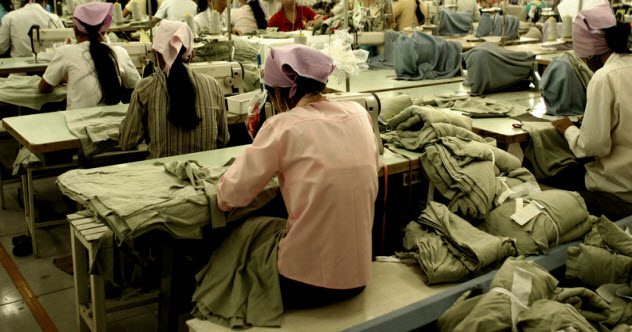
At its peak, coin was rushing into the Roman Empire. The emperors and the government were basking in an absolute avalanche of wealth that helped them control the amend part of the known globe. Merely just because the nations had money didn't mean the Roman people were getting rich.
Instead of hiring their own people, the Romans got strange slaves to do nigh of their work. A massive office of their production was being done by strange slaves, which left the actual citizens with nothing to do. A lot of Romans were unemployed, relying on government subsidies and handouts just to survive.[1]
Modern companies can't get away with literally hiring slaves these days, only they tin can come pretty close. Like Rome, the modern Western countries outsource the vast majority of the things they buy to sweatshops that sometimes pay as little as 64 cents an hour.
Approximately 60 percent of the things Americans buy are made overseas, but information technology'south not but the US that does this. China currently makes about 50 percent of the world'due south clothes and seventy percent of its mobile phones.
The real lesson from Rome, though, is what might happen adjacent—because Rome's setup didn't final forever. The slaves started to demand more and revolted. Meanwhile, the people of Rome, influenced past Christian morality, started feeling bad nearly using slaves.
Their labor system started to plummet. Since slave labor was the backbone of their entire economy, everything else went down with it.
nine Obesity Epidemics Don't Become A Lot Of Sympathy

The average Roman probably wasn't obese. A lot of Roman civilians struggled just to get nutrient, but the emperors were a different story.
The rich of Rome spent and then much time having feasts and orgies that it really became common practice to throw upward mid-meal to continue information technology going. After watching Emperor Nero and his friends have a feast, the philosopher Seneca wrote that the wealthy of Rome "vomit that they may swallow; and eat that they may vomit."
But information technology wasn't just Nero. Julius Caesar once escaped an assassination attempt because he'd stepped out to vomit upward his meal. Emperor Vitellius had a reputation for starting the day past belching his breakfast in the faces of his soldiers.[two]
In the modernistic globe, poor people in wealthy countries usually become obese—specially in the American South. In some states, type 2 diabetes rates are twice as high as they were xx years ago. In fact, one-3rd of the population is obese now.
The real lesson from Rome, though, is that having too much turns people confronting you. The reason these stories about lascivious Roman emperors take been passed on for and so long is considering their people wanted to make them await bad. 1 group of people was gorging themselves while another starved. All that was won by the wealthy was resentment, wars, and a lot of health issues.
8 The Nouveau Riche Never Remember Where They Came From
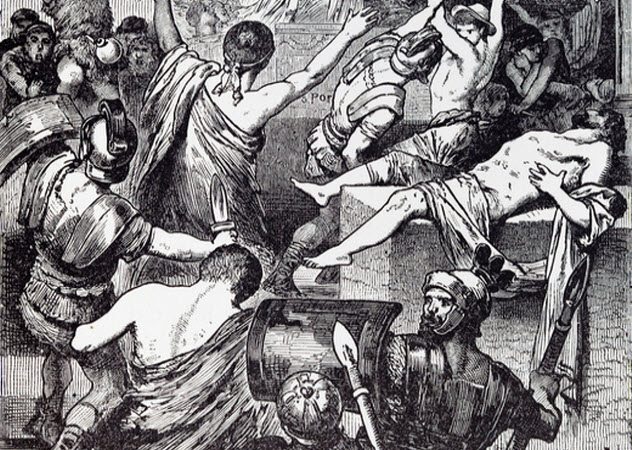
When Rome was a republic, one of its biggest internal problems was the fight between the patricians and the plebeians. The patricians were aristocrats who got their status by nativity, while the plebeians were the common people who had no mode of making a better life at the fourth dimension.
Like our mod societies, the plebeians fought for the right to pull themselves up by their bootstraps. They won equal rights, got the opportunity to play a role in Roman politics, and had the chance to make it rich. They helped each other get wealthy, voted their boyfriend plebeians into ability, and and then sat back and waited for their friends to make a new utopia of equality.
It didn't pan out. The newly rich plebeians didn't do much to help out their old friends.[3] They just splurged with all their money and enjoyed life as rich people. The plebeians didn't realize that right away, though.
For a while, things were actually better and they thought their new government was working. Just it turned out to be an economic boom brought on by a state of war. When the nation dipped back into a recession, they were poorer than ever.
The poor stayed poor, the rich stayed rich, and the rare few who broke the mold didn't practice a thing to help out their fellow man.
7 People Who Are In Debt Can Be Controlled

After Rome was sacked past the Gauls, the commonwealth had to funnel a fortune into defense. Taxes went up, the poor went broke, and the people of Rome were before long overwhelmed with so much debt that they couldn't encounter any way out of it.
It's something that ought to sound familiar to a lot of u.s.a.. For example, the average American leaves college with more than $37,000 in debt from educatee loans solitary, and that'southward not fifty-fifty the worse case. In Commonwealth of australia, Switzerland, Kingdom of norway, kingdom of the netherlands, and Denmark, the boilerplate person'southward debt is more than twice their almanac income. In fact, the average Australian owes $250,000.[4]
Like a lot of usa today, the plebeians of Rome lobbied their government for debt forgiveness. And the authorities listened. Now that the lower classes were politically equal, the politicians started pandering to them. Populist leaders promised "bread and circuses"—in other words, entertainment, nutrient, and debt relief.
The plebeians were so desperate to feed their families that they didn't care what a politician did as long as he canceled their debt. So they started voting for populist leaders similar Julius Caesar and Caesar Augustus. Since the breadstuff and circuses kept coming, the plebeians didn't get too worried when the elections stopped.
6 Printing Money Isn't A Skilful Manner To Save The Economy
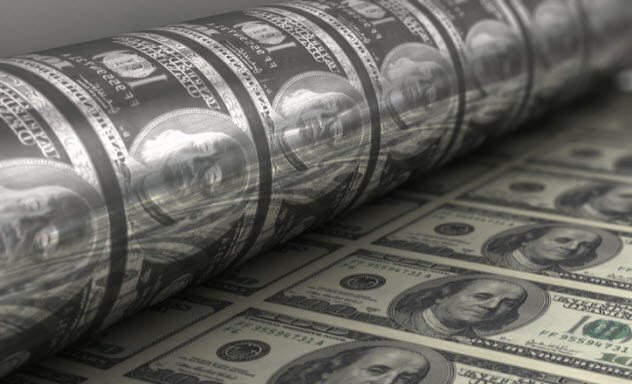
A Chinese official one time warned the US that its national debt was getting out of command. America, the official complained, was selling likewise many Treasury bonds. It was increasing the national debt in a way that could collapse the entire economy. America wasn't just selling bonds. In the official's words, the country was "printing money."[5]
That's a move that ruined Rome. As the empire got bigger and its expenses got higher, Emperor Nero came upwards with the bright idea of using less silver in Roman coins. That way, he could print more coin. And if Nero could print more money, he figured that he would have enough to brand that Scrooge McDuck money pool he'd been dreaming of.
The idea didn't ruin everything overnight. But Nero's successors copied him, and of form, inflation went wild. Over the next 200 years, the price of wheat increased 200-fold and Roman coins became almost completely worthless.
Whether America is really "printing money" is up for debate. But they're definitely putting off money bug for later. Despite having the highest GDP in the earth, the US likewise has the highest debt in the world. They owe a staggering $18 trillion dollars, a lot of which comes from Treasury bonds.
The country in second place for "most debt" is the European Union. That's right—the unabridged European union, which is 28 countries combined, has less debt than the Usa has on its own.
5 Don't Underestimate The Barbarians
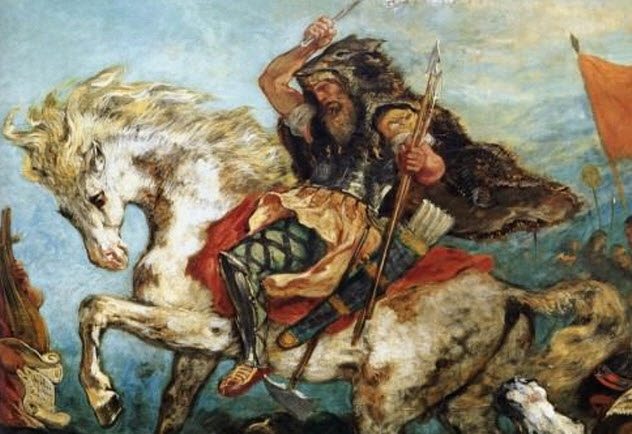
Rome managed to stand up its footing against massive empires. The Romans fought against Greece and Egypt and won. The greatest and well-nigh advanced societies fell at their feet, simply Rome still got crushed—by barbarians.
Everything started to go wrong when Attila the Hun rampaged through the Western Roman Empire. To the Romans, this was a primitive culture. One Roman wrote that the Huns were "so little avant-garde in civilisation that they [made] no utilize of fire, nor whatever kind of enjoy, in the preparation of their nutrient." To the Romans, this was like a battle confronting cavemen.[6]
Information technology was a footling like the modern war on terrorism. On one side was the most advanced and powerful country in the world, and on the other was a grouping of fell men who didn't care if they lived or died.
The Romans lost. Attila demanded one-half their empire. When they refused, he rampaged through their land, stealing their siege weapons and avant-garde engineering science equally he went. By the end, the Romans had to meet all his demands. From and so on, they were regularly paying the Huns massive tributes only to beg the Huns not to finish Rome off.
4 Definitely Don't Railroad train The Barbarians In Advanced Warfare
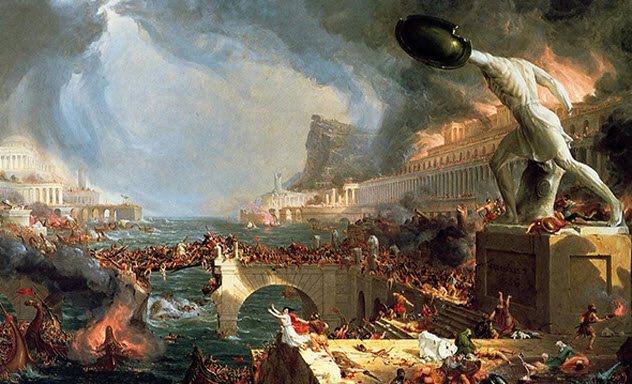
Attila the Hun didn't make it to Rome, but the Visigoths did. The Visigoth leader Alaric managed to lead a horde of barbarian warriors all the manner to the Roman capital, take everything they had, and call himself merciful for letting them go on their lives. The Roman army was powerless to terminate the barbarian hordes considering, for the almost part, the Roman army was the barbarian hordes.
Alaric and the men who sacked Rome were armed and trained by the Romans. Years ago, Rome started hiring Visigoths and Gauls to fill up their legions. Eventually, in that location were so many barbarians in the Roman army that the Roman people merely called their army "the barbarians" to save time.[seven]
During the Soviet-Afghan War, the U.s. Regular army chosen Islamic fighters from around the Middle East to come to Afghanistan and then the Americans could arm and train these Islamic fighters. Simply as Rome trained Alaric and the Visigoths and gave them siege weapons, the U.s.a. trained Osama bin Laden and the Taliban and gave them Stinger missiles.
Mayhap nosotros shouldn't exist surprised that it turned out the aforementioned way.
3 Large Armed forces Budgets Broke Big Countries

The problem with being the earth's superpower is that it makes you the world'due south biggest target. That's something Rome learned. As they got bigger, their threats got bigger and they had to pour everything they had into the army.
It's something that America has learned, as well. Even though war machine spending has skyrocketed since September 11, 2001, America isn't condom. Today, Americans funnel $598.five billion per yr into their military. To put that in perspective, more than one-third of the whole globe's military spending is done past the US.[8]
The Romans dealt with their ever-growing regular army past cranking up the taxes. But it didn't actually brand things improve. With massive taxes weighing downward the people, unemployment and poverty ran rampant.
The people started rioting in the streets against the government. For a lot of Romans, it became hard to empathise what made living in Rome worth giving up everything to defend it?
2 Picket Out For Ascension Eastern Empires
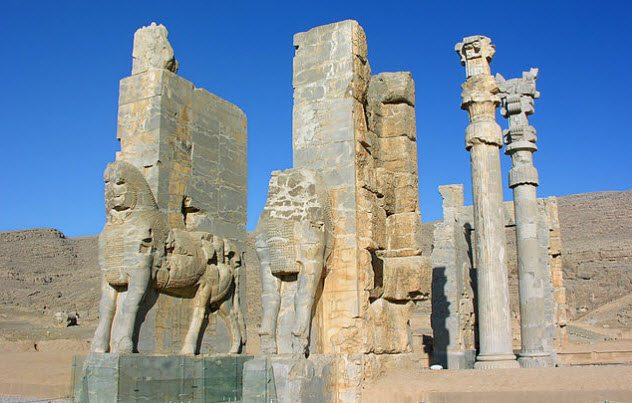
Perhaps the biggest threat wasn't the people who were trying to burn Rome to the ground. In a way, the nigh unsafe problem may take been the people who were letting Rome be: Parthia, the Eastern empire than the Romans could never defeat.
Early on, the Romans and the Parthians tried to destroy each other merely they couldn't pull it off.[ix] The two nations were too powerful, and it simply wasn't worth it. So, in the end, they called for a peace treaty and agreed to exit side by side in relative peace.
They entered a weird human relationship as trade partners that didn't trust each other and that tried to beat each other in every deal—a footling similar the United States and mod China. And that ended up changing everything.
When a peaceful Han Chinese diplomat tried to attain Rome, the Parthians stopped him and turned him abroad. The diplomat found out that the Parthians had been deliberately keeping the 2 nations apart and then that they could command Roman trade.
If he'd made it through, though, Rome might have had an ally and an insight into the Huns before Attila invaded. And everything could have inverse.
1 The Autumn Of An Empire Doesn't Happen Overnight
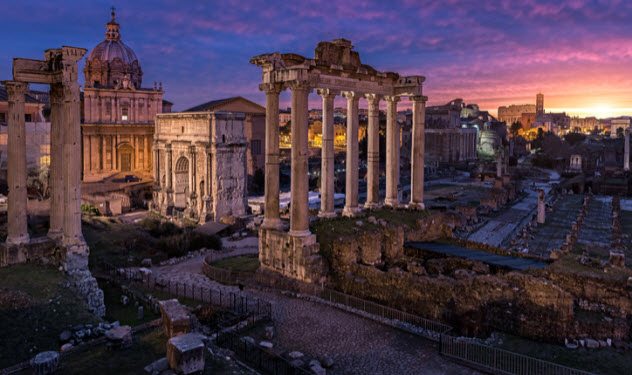
Rome didn't collapse in a pile of fire and ashes. Only getting sacked past barbarians didn't spell the end of Rome. It died out peacefully over hundreds of years from dozens of decisions that probably seemed like not bad ideas at the fourth dimension.
As the different parts of Rome started feuding over religious changes and economic problems, it got split up into parts a few times before it officially became 2 different empires in Advertizement 364. A little over 100 years afterwards, the Western empire completely barbarous to the hands of the barbarians and the lines of Europe started looking similar crude early versions of a mod map.[10]
Even that, though, wasn't the real end of Rome. The Eastern empire, now known equally the Byzantine Empire, lived on for more than one,000 years after the split. As the Byzantine Empire, Rome survived the Sasanian War, the Muslim conquests, and even the Crusades earlier they were finally absorbed by the Ottoman Empire.
It took 1,000 years, though, for Rome to die. Information technology wasn't over the second they stopped being the world'south biggest superpower. They lingered on for centuries. Their quality of life slowly changed, and almost of their people were probably unaware that they were living through the autumn of an empire.
Odds are, the same matter will happen to us. We won't get out in a large explosion. We'll just slowly start fighting wars we can't win and struggling with an economy we can't handle. And slowly, nosotros'll become nothing more than than a chapter in a history book.
Source: https://listverse.com/2017/07/05/10-lessons-for-modern-society-from-the-fall-of-ancient-rome/

Enregistrer un commentaire for "What Can We Learn Today About the Romans"