Younger | Table Read & First Look at Season 4
How to teach children to read

Educational activity children to read is one of the virtually complicated, backbreaking and time-consuming parts of teaching English. In that location're many approaches to teaching to read nowadays. However, I'll focus on two popular and constructive methods: Phonics and "Look and say".
Phonics
Phonics is a method of teaching immature learners how to read which focuses on how letters brand sounds, and how these sounds make words. This approach is not meaning focused, it is just most decoding and pronunciation. Teachers are to put accuracy before speed considering fluency (i.e. speed, accuracy, expression, and comprehension) will come with time.
Phonics is the study of the relationship between the spoken and written language, i.east. phonemic awareness and letter shape. Each letter or combination of letters represents a sound or sounds. The information is codification, as we must be able to recognise which symbols make which sounds in order to read. Children are taught 44 letter sounds, which is a mix of alphabet sounds:
- grapheme (1 sound – 1 letter, e.g. c, t, a )
- digraphs (1 sound – 2 letters, eastward.g. sh, thursday, ai, ue )
- trigraphs (i sound — three letters, e.g. ght )
This information is found in the Alphabetic Code . There's no one order you lot choose to teach phonics, merely it'due south definitely better to go from simple to more complex phonics.
"Phonics involves the instruction of the transparent alphabet (due east.g. /k/ as in «cat») before progressing onto the "opaque" alphabet (e.g. /g/ as in «school»). In other words, children are taught steps which are straightforward and easy earlier being taught the complications and variations of pronunciation and spelling of the full alphabetic lawmaking"(© Wikipedia ).
Therefore children are showtime taught graphemes and high-frequency tricky words, then digraphs and trigraphs; then less frequency tricky words. Moreover, information technology'south meliorate to base of operations phonics on the target vocabulary, so phonics are not separated from the main class and children learn every bit they go along.
What are tricky words?
These are some words which don't follow easily recognisable patterns. Children take to larn these words in their entirety, by sight. Native speakers learn a lot of these at school through verse, so one way to teach them is to say a word that rhymes with the tricky word (for case, "shoe" rhymes with "zoo" and "key" rhymes with "tree"). Another skilful way to practise them is flashcard-type games.
When a child is learning to read in that location are crucial things to learn:
- how the sounds are represented past written messages;
- how to alloy (synthesise) the sounds together to brand words;
- how to segment for spelling (e.g. spell your proper noun).
Children are taught to read messages or groups of letters by saying the sound(s) they correspond. For example, how to teach the discussion "cat" using the Phonics method.
- Say the sound [k].
- Take the student echo the sound.
- Say the whole word, "cat" [kæt].
- Tell the pupil to repeat the whole word.
- Say some other words that starting time with [k]: "block", "cup", "coke".
- Prepare flashcards with dissimilar pictures. Say the words for the student to mind and choose the words with the sound [chiliad] (to practise sound recognition)
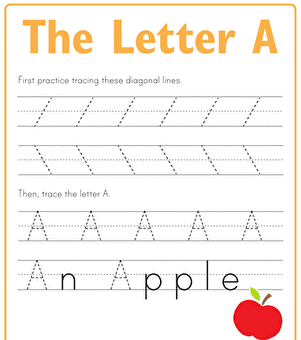
- Tell the student to write the letter, then the word. (to practise tracing and letter recognition)
Teachers have to read a full range of target vocabulary, sentences, comic strips, literature with the children and ensure that students have a total range of experience of activities associated with literacy such as function play, chants, songs, verse, simply children are not expected to 'read' text which is beyond them, and the method does not involve guessing the meaning from context, flick, and initial letter clues. If students do non know or cannot read, a teacher reads for them.
This is a great v-level course you lot tin can use.
Pros of Phonics:
- Students larn sounds.
- They learn to read step by stride.
- It's more than comprehensible, consequent and based on Lexis.
- Children can read the words they don't know if they know the sounds spelling
Cons of Phonics:
- Students cannot start reading until they learn enough sounds.
- They tin can read but the words with the sounds they know.
- It can have a long time.
- This approach is not comprehension-focused.
Look and say
Phonics can be compared with the whole discussion , or 'Wait and say' arroyo, which focuses on recognising words. This is a method of teaching reading based on the visual recognition and memorizing of words rather than past the association of sounds and letters.
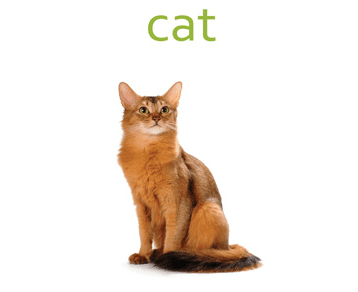
For example, using a "Await and say" approach a child may be shown the word "cat" on a flashcard and is told, "cat". The child, over time, and then learns that when they run across the symbol "cat", they are to say the word "cat". This style English language becomes kind of a logographic language, that has thousands of detailed symbols that correspond individual words.
Movie-words or sight words account for up to 75% of the words used in beginning children's print materials. Sight word lists have been compiled based on high-frequency words, for example, the Dolch word listing. These words are divided into levels which are prioritised and introduced to children co-ordinate to a frequency of appearance in offset readers' texts.
 Pros of "Look and say":
- Children learn loftier frequency and easy words fast.
- Students learnt how to read "similar" new words by association and give-and-take recognition. For instance, "cat", "bat", "rat". Children recognize words automatically, as a consequence, a commencement reader will be able to place the bulk of words in a get-go text earlier they fifty-fifty try to read information technology (in phonics approach they encounter the similar letter of the alphabet sounds, when in "Look and say" they see the like symbols).
- It allows children to concentrate on meaning and comprehension as they read without having to stop and decode every unmarried word.
- It helps to learn tricky words with unusual spelling, as they cannot be sounded out using basic phonics noesis.
Cons of "Await and say":
- Children are required to memorise thousands of words and cannot decode new words they come across independently. Instead of having to remember simply 26 letters and their matching phonemes, children have to use their memory space to remember each and every discussion every bit a symbol.
- Children may exist stuck in reading if they don't know how to read certain letters.
- Students may have difficulties with spelling.
- You always need an image: pictures or miming which doesn't work well for abstract things of certain phrases.
Based on the data above I would recommend combining both methods to brand teaching reading more productive, comprehensible, logical and consequent.
Source: https://skyteach.ru/2018/11/29/how-to-teach-children-to-read/

Enregistrer un commentaire for "Younger | Table Read & First Look at Season 4"